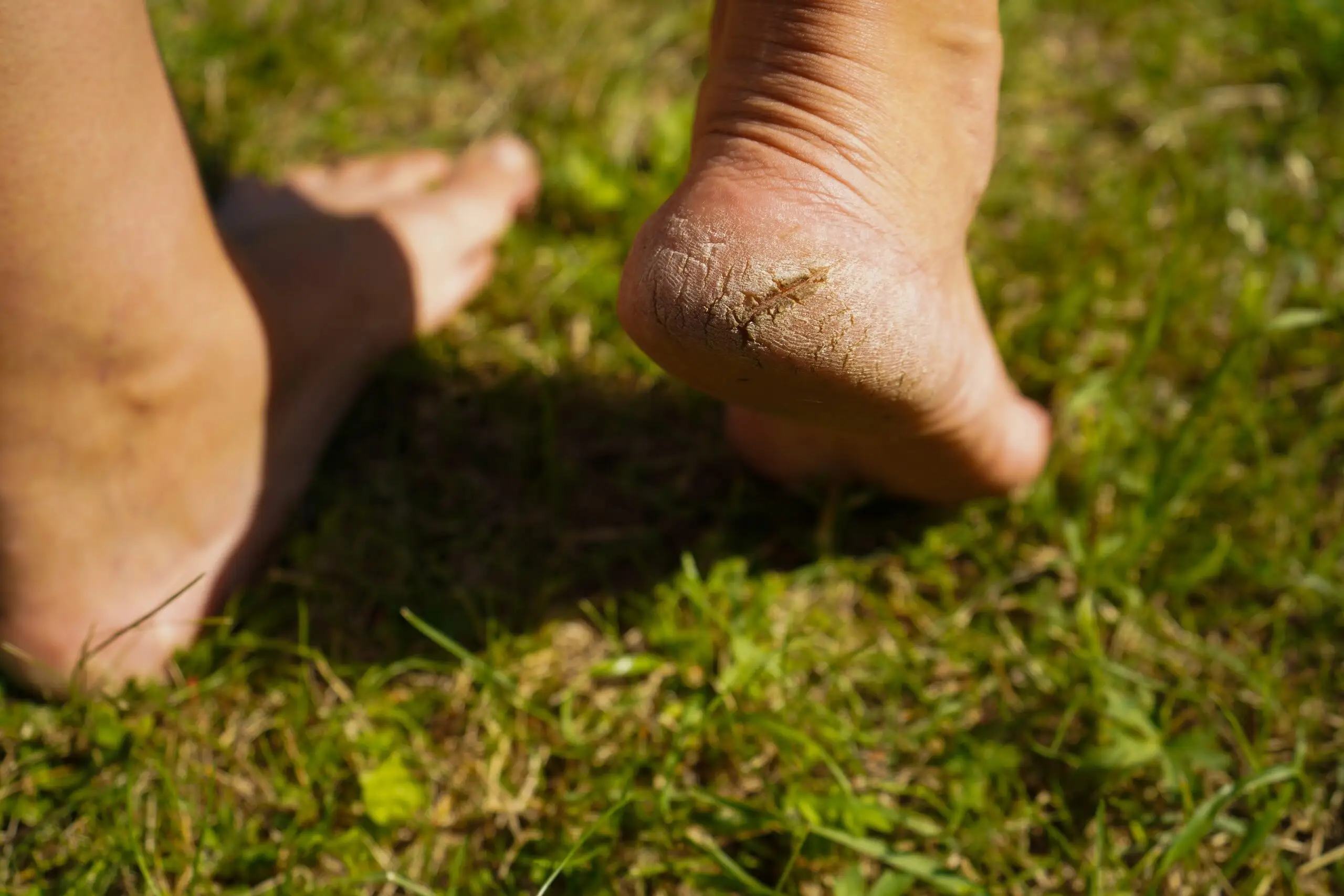

Dry skin on feet is common in spring, especially after winter when heels can become rough and painful. This condition results from dehydration, pressure, and friction, often worsening with activity and shoe changes in spring. Early recognition and proper foot care help prevent complications.
Why Dry Skin on Feet Appears After Winter
During winter, skin loses hydration due to dry air and increased friction from closed shoes. This causes thickening and callus formation around the heel, reducing skin flexibility and increasing pressure during walking.
Dry Skin on Feet in Spring: Why It Gets Worse
With the resumption of activities in spring, feet undergo more pressure due to increased walking. Switching to lighter, less supportive shoes exposes skin to air, worsening dehydration. Less supple skin may crack under pressure, leading to split heels (heel cracks).
Signs Your Skin Is Too Dry
Recognizing dry skin on feet early is essential:
- Rough texture
- Tightness
- Discoloration (whitish, yellowish, brownish)
- Itching and peeling
- Small cracks
Advanced dryness causes deep cracks, bleeding, heel pain, and walking difficulties.
Common Causes of Cracked Heels
Cracked heels often stem from dehydration making skin rigid and less elastic. Calluses form on heels and crack under weight and walking stress. Mechanical factors like poorly fitting shoes (footwear importance) and barefoot walking increase risk. Medical conditions such as diabetes, eczema, or psoriasis further weaken skin.
Common Mistakes to Avoid
Harmful habits include cutting skin oneself, using harsh products, neglecting daily hydration, and wearing open shoes too early, all which aggravate dryness.
How to Effectively Treat Dry Skin on Feet
Effective treatment involves daily hydration, gentle exfoliation, foot baths to soften skin, wearing supportive shoes, and sometimes using orthotic insoles to redistribute pressure.
When to Consult a Podiatry Clinic
Consult a podiatrist if cracks deepen, become painful, or bleed, or if walking becomes difficult. Untreated cracks can worsen and may lead to infection; professional care tailors treatment.
Frequently Asked Questions About Dry Skin on Feet
Why Is My Foot Skin Dry Even Though I Hydrate?
Hydration helps but does not fully address causes such as pressure, friction, and shoe type (shoes to avoid).
Can Cracked Heels Become Infected?
Yes, especially when cracks are deep and skin is fragile.
Why Do My Heels Turn Yellow or Whitish?
This discoloration is due to dry, thickened, less supple skin.
Can Dry Skin on Feet Become Painful?
Yes, cracking can cause pain when walking.
Do Sandals Worsen Dry Skin on Feet?
Some sandals increase friction and offer little support, worsening dryness.
How Long Does It Take to Improve Dry Skin on Feet?
Improvement varies; mild cases respond quickly, advanced cases take longer.
Is Dry Skin on Feet More Common With Age?
Yes, skin naturally dries and fragilizes with age.
Dry skin on feet is common in spring due to dehydration, pressure, and friction. Recognizing signs early and practicing good habits limit complications. When pain occurs, professional evaluation ensures appropriate care.