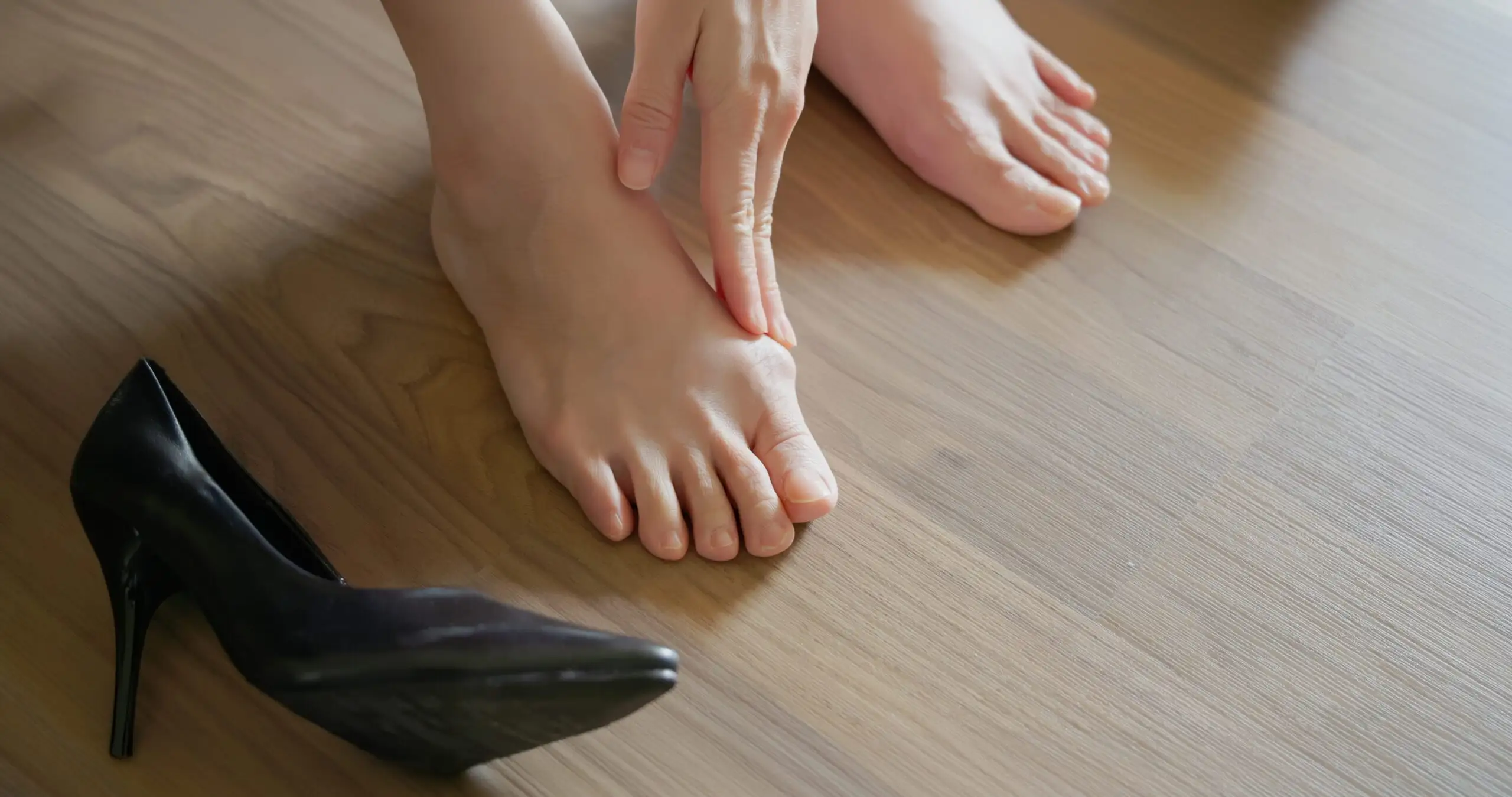

Choosing the right shoes for a bunion (hallux valgus) is key to reducing joint pressure, limiting pain, and slowing deformity progression. Bunions are common, affecting about 38% of women and 8% of men in Canada, often caused by poorly fitted shoes. Fortunately, those with bunions can still wear suitable shoes by following important guidelines.
Choosing the Right Shoes for Bunions
To avoid pain linked to hallux valgus, select soft, wide shoes with a slight heel, or well-fitted sandals that offer foot freedom. High heels such as stilettos are not recommended. Flexibility and comfort are essential, and many feminine shoe options accommodate bunions without sacrificing style.
Choosing the Correct Shoe Size
Proper shoe size prevents pressure points and allows toe movement. Ensure enough room in the shoe’s forefoot to match your foot’s width and bunion morphology. It’s best to shop in the late afternoon when feet swell naturally. Removing the insole to check if your foot fits comfortably on it can help verify shoe width.
Develop Good Shoe Habits
Wearing the right shoes also means adopting habits such as varying shoe models and heel heights every 2 to 3 days. Alternating shoes maintains tendon flexibility, avoids muscle contractures, and eases bunion discomfort by preventing the foot from becoming stiff due to constant exposure to one shoe height.
Frequently Asked Questions About Shoes for Bunions
Which Shoes Should Be Avoided with Hallux Valgus?
Avoid narrow, rigid shoes and high heels that increase pressure on the big toe joint.
Are Orthopedic Insoles Useful for Bunions?
Orthopedic insoles help redistribute pressure and enhance comfort for bunion sufferers.
Can You Wear Elegant Shoes Despite Having a Bunion?
Yes, many modern shoes combine width, flexibility, and style suitable for those with hallux valgus.
When Should You See a Podiatrist for a Bunion?
Consult a podiatrist if pain persists, worsens, or limits daily activities.
Bunions are common especially among women, but do not prevent wearing comfortable shoes. Follow simple tips: choose shoes that avoid pressure points, fit your size, and rotate shoes regularly. You have access to a variety of comfortable and stylish shoes despite hallux valgus. If pain continues, seek professional advice at our clinic directory.