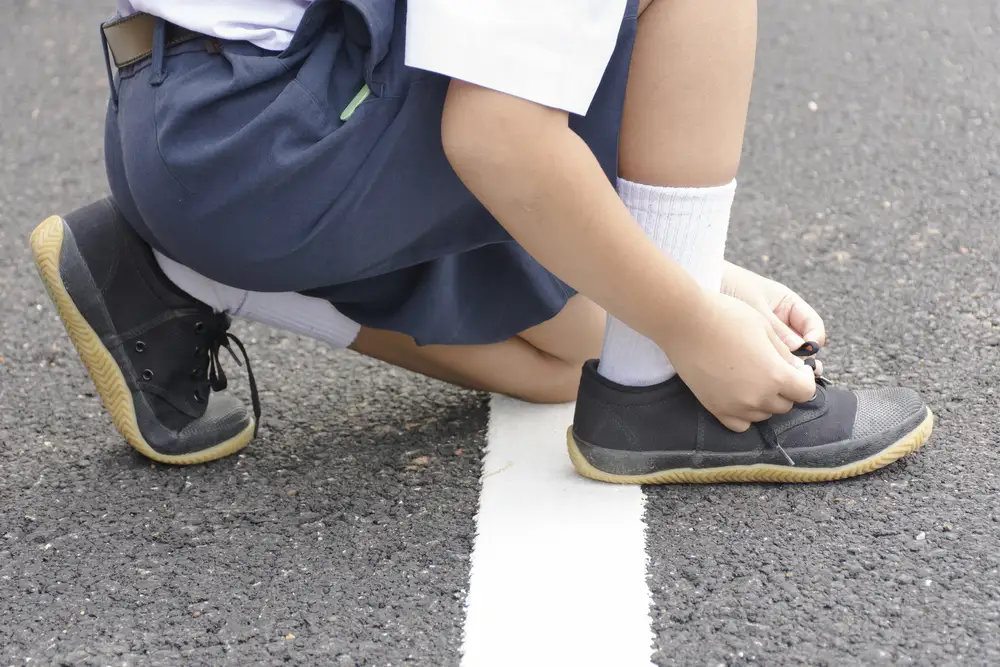

Back-to-school isn’t just about buying pencils and lunch boxes. Checking your child’s children’s shoes before the school year starts is essential. The right pair of children’s shoes helps prevent foot pain, supports healthy development, and improves posture throughout the year.
Why Proper Shoes Matter for Growing Feet
Children spend most of their school day standing, walking, or sitting. Unsuitable shoes cause discomfort, affect posture, and may lead to flat feet or muscle fatigue. Since their bones are still forming, adequate foot support is essential.
Key Features of Good Children’s Shoes
Supportive Sole and Heel
A firm, non-slip sole provides stability, natural foot movement, and reduces falls. The rigid heel counter keeps the heel aligned and prevents sideways movement.
Spacious Toe Box
A wide toe box allows toes to move freely, preventing friction, redness, corns and small injuries.
Secure Fit and Fastening
Proper fit ensures comfort all day. Laces or velcro straps keep the foot in place and prevent sliding, lowering blisters and injuries risk. Leave about one finger’s width (1 cm) at the shoe front for growth and toe space.
Durable, Breathable Materials
Choose leather or synthetic leather for durability and breathability, mesh for airflow, and cotton or microfiber lining to reduce moisture and odors. Soles made of rubber or EVA offer grip, durability, and shock absorption. Avoid very rigid plastic soles that restrict natural foot movement and cause discomfort.
Common Mistakes to Avoid
- Buying oversized shoes hoping they last longer
- Choosing overly flexible shoes lacking structure that can harm foot mechanics
- Using flat, worn-out shoes no longer cushioning or supporting the foot properly
These mistakes may cause blisters, poor posture, or musculoskeletal problems over time.
Podiatrist Advice on Children’s Shoes
Podiatrists recommend prioritizing function over style. Guide children toward shoes that provide structure and comfort, even if they choose themselves. A podiatric evaluation can detect flat feet or gait imbalances, sometimes requiring custom orthotics. Usually, well-designed shoes suffice to maintain foot health.
Shoe Care Tips for Parents
- Rotate between two pairs to extend lifespan
- Check soles every two months for uneven wear
- Clean shoes weekly to avoid bacteria buildup
Regular checks keep shoes functional and clean, reducing skin problems or infections risks.
FAQ: Common Questions About Children’s Shoes
Can my child wear sneakers all day?
Yes, if they offer solid arch and heel support.
What’s the difference between flexible and rigid shoes?
Rigid shoes provide more structure in the heel and arch. Excessively flexible shoes risk instability and poor foot mechanics (source).
Are flat shoes harmful to kids?
Yes. Without cushioning or arch support, flat shoes cause fatigue, poor posture, and joint pain.
Do children need orthotics at a young age?
Not always. Assessment by a podiatrist determines need; often, supportive shoes are enough.
Conclusion: Start the School Year on the Right Foot
Start the year by choosing children’s shoes that support posture and growth. Prioritize foot health this year. Book a podiatric consultation today for personalized expert guidance.