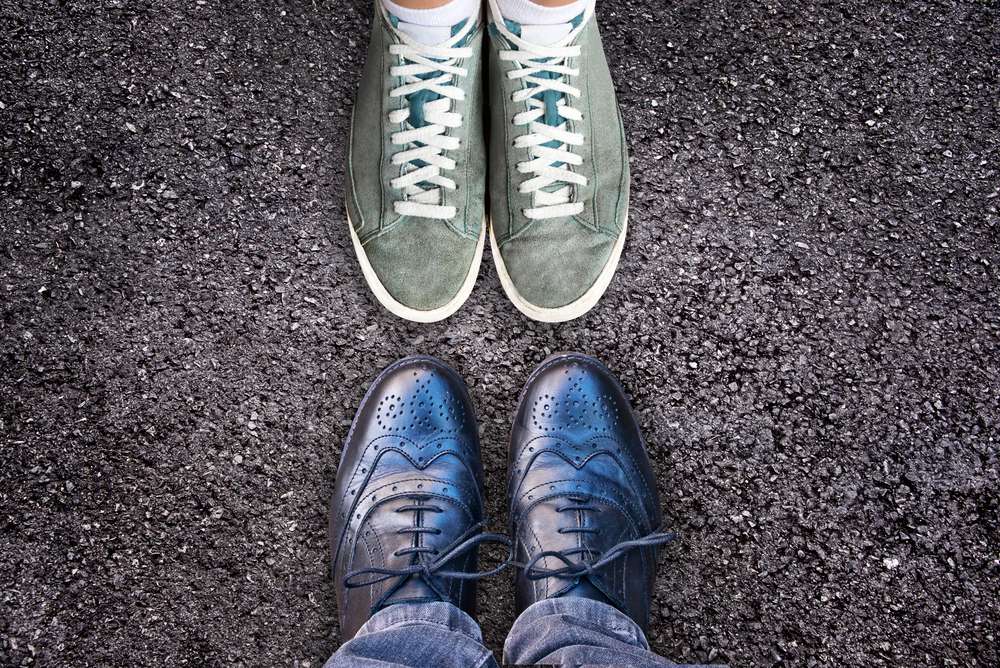

Flat foot is a deformation of the arch of the foot that can significantly interfere with daily life.
In addition to causing joint pain in the knees, ankles and back, flat feet also affect posture and balance. The solution could be as simple as purchasing shoes adapted to flat feet morphology.
But how to navigate the multitude of options and what factors to consider?
Understand your foot type
Before buying shoes, it is important to understand your foot structure. The arch of the foot is generally classified into three categories: low arch (flat foot), normal arch (regular foot), and high arch (hollow foot). The regular foot distributes weight evenly, while the hollow foot has a pronounced arch increasing injury risks like plantar fasciitis or metatarsalgia. The flat foot has no arch, causing strong pronation and discomfort.
How to identify flat foot? A reliable method is the wet footprint test on cardboard: wet your foot and place it on dark cardboard; if the print shows the entire foot, your arch is likely flat or collapsed. Consulting a podiatrist who uses advanced techniques like laser scanning or postural imaging is the best way to evaluate your foot health.
Choose the right shoes without compromise
Having flat feet is not as limiting as one might think for footwear. Key tips include trying shoes late in the day when feet are expanded, choosing boots or ankle boots with laces for better ankle support, and ensuring the shoes can be tightened properly.
However, some shoes should be avoided: high heels that disrupt weight distribution, fully open footwear lacking support, completely flat models like moccasins or beach sandals, and shoes without heel reinforcements such as certain sneakers.
The right shoes for athletic persons with flat feet
A main characteristic of flat feet is hyperpronation, where ankles roll inward. For runners or those engaging in impact sports, this can cause pain. To minimize injuries, athletes with flat feet should choose shoes providing good movement control, additional stabilization support, neutral shoes with arch support, and sufficient cushioning.
PiedRéseau: solutions adapted to the needs of your feet
Over time, flat feet can become painful or limiting. When adapted shoes are not enough, PiedRéseau clinics offer treatments including foot orthotics and manual therapy for conditions like bunions. Don’t let flat feet affect your quality of life; consult a PiedRéseau podiatrist.