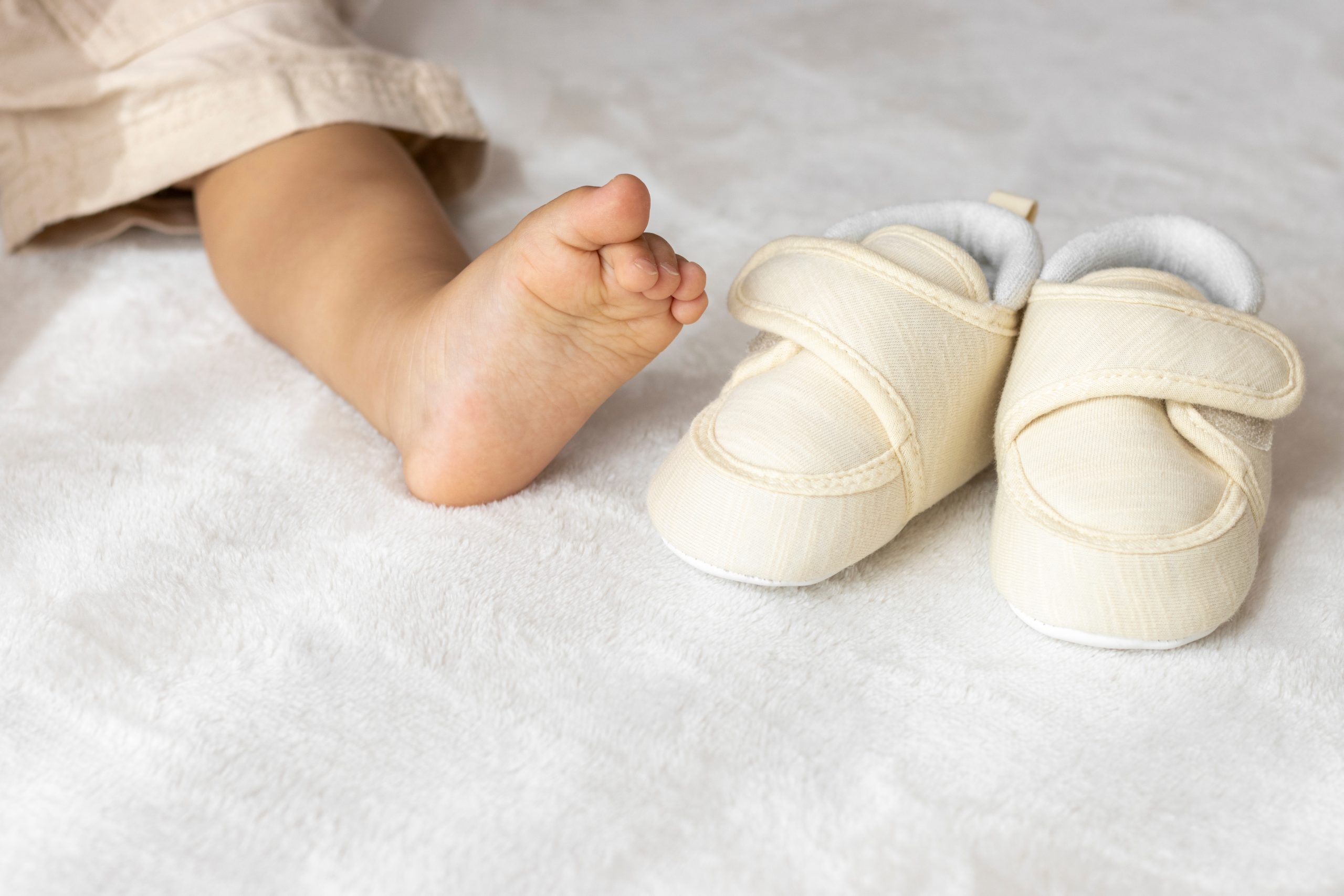

When a baby takes their first steps, choosing the right shoes becomes essential. The transition from baby booties to walking shoes requires understanding key aspects of a baby’s foot and how to fit shoes properly by age for a healthy development.
Is it necessary for babies to wear shoes?
Babies are born with flat feet; their arches develop with growth. Shoes are not needed until walking begins—booties merely protect from cold or rough surfaces. Flexible socks and booties that aren’t tight support mobility and growth. Once a baby starts standing and walking, it is ideal to keep them barefoot as much as possible to foster proprioception, muscle development, and prevent issues caused by improper footwear.
When the infant takes first steps, soft, breathable shoes with non-slip soles and thicker heels are best. Contrary to old beliefs, babies don’t need rigid boots since their ankles are sturdy enough at this stage.
How to transition from booties to shoes while learning to walk
Understanding the characteristics of the baby’s foot is key for easing the transition. Around 18 months, the cartilage begins to calcify and feet strengthen, enabling your baby to walk upright. Allowing barefoot exploration develops foot muscles, flexibility, balance, and spatial awareness.
As confidence builds, soft shoes with non-slip soles protect feet and expand mobility range. When your child is old enough to go outside, prioritize shoes designed for outdoor use—sturdier but still flexible.
How do you pick the best baby shoes?
Accurate foot measurement is fundamental. Check that toes are not cramped and there is room at the heel, ideally enough space for your index finger behind the foot. Shoes for outdoor walking should have a larger heel sole for support yet remain flexible at the toes.
Choose comfortable sizes, opting for the next size up if between sizes. Fasteners must securely hold the foot. When buying used shoes, inspect soles and fasteners for wear, and clean interiors to avoid germs or fungus, especially in summer shoes.
Ensuring a healthy transition for baby’s feet from booties to shoes
Regularly measure your baby’s feet to ensure shoe fit and avoid discomfort from tight shoes. For concerns about foot stability or shape, PiedRéseau’s podiatry clinics offer expert support.