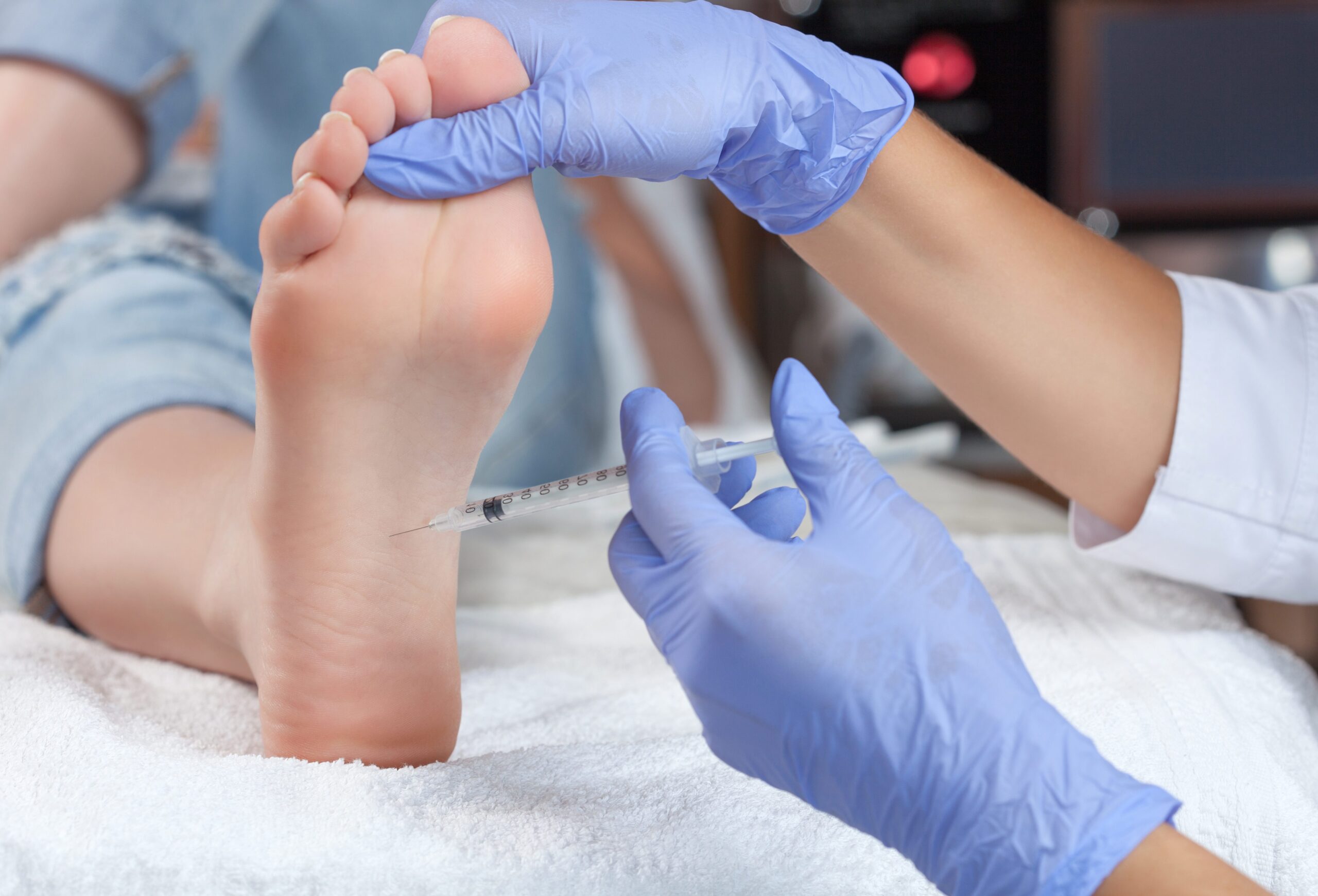

Plantar fasciitis is caused by a stretching or rupture of the plantar fascia, the fibrous band supporting the plantar arch, leading to pain in the heel and/or foot arch.
Several non-invasive treatments exist to treat plantar fasciitis, including manual foot therapy and therapeutic bandaging by a podiatrist. Less severe cases can even be managed at home with proper care.
When traditional treatments are ineffective, more aggressive options such as foot orthotics, podiatry surgery, or cortisone injections may be advised.
What is cortisone?
Cortisone is derived from cortisol, a hormone secreted by the adrenal glands that regulates body functions including carbohydrate metabolism and stress management. Its potent anti-inflammatory properties make cortisone valuable for medical use.
Today, cortisone is commonly used to ease inflammatory and joint pain.
Why is cortisone injected?
Cortisone can be administered in various ways, but injection is the most effective method for relieving plantar fasciitis.
- Effectively target the problem area;
- Relieve pain quickly;
- Reduce recovery time.
This targeted approach is especially beneficial for localized pain conditions like plantar fasciitis or Morton’s neuroma.
How to be sure the cortisone injection works?
Cortisone injections for plantar fasciitis are not suitable for everyone, but following certain recommendations can improve success and prevent recurrence, particularly for active individuals.
- Adjust recovery time between sports activities;
- Ensure proper warm-up;
- Stretch after activities;
- Replace running shoes regularly;
- Resume training progressively.
If any activity causes pain, consult your podiatrist promptly.
I suffer from heel spurs, can a cortisone injection help me?
Heel spurs, often painless bone growths in the heel linked to the plantar fascia, can cause discomfort when they injure the plantar fascia due to excessive strain.
Diagnosis often involves X-rays by your podiatrist. Treatment options include immobilization, cushioned footwear, and plantar orthotics. If pain persists, cortisone injections may be recommended. Surgery to remove part of the spur is a last resort.
PiedRéseau – your guide in the treatment of plantar fasciitis
Plantar fasciitis can worsen if untreated. PiedRéseau podiatrists evaluate your pain and propose the best treatments, including orthotics, manual therapy, or cortisone injections, reflecting their expertise.
Consult PiedRéseau to see if cortisone injections are right for you.