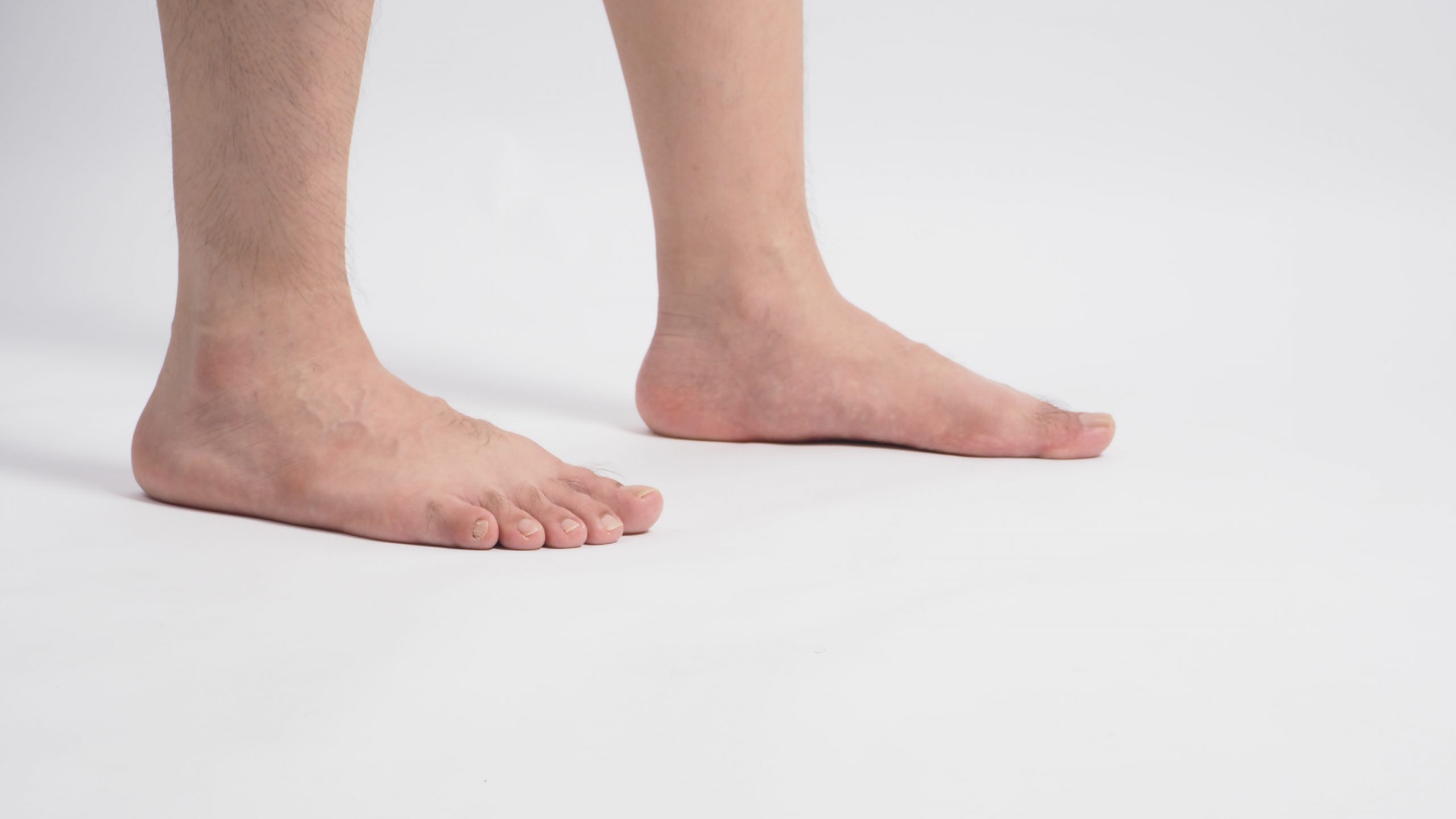

Flatfoot, characterized by little or no curve in the foot arch, can cause foot and joint discomfort when standing or walking. This condition may lead to significant postural issues but is treatable with various options.
Symptoms and related problems of flatfoot
Flatfoot sufferers often experience localized pain in the plantar area, along with musculoskeletal, postural, and articular problems. Common symptoms include:
- Arch of the foot pain
- Ankle joint pain
- Foot shape changes
- Imbalance on uneven surfaces
- Inward tilting of heel and knees
- “Ducking” gait
- Knee pain
- Lower back pain
Untreated flatfoot may cause complications such as plantar fasciitis, heel spurs, Morton’s neuroma, metatarsalgia, bunions (Hallux valgus), back problems, and tendon pain.
Causes and types of flatfoot
Flatfoot arises from various causes and differs between children and adults. Congenital flatfoot primarily affects toddlers and is linked to factors like family predisposition, excessive weight, ligament elasticity issues, muscular deficits, or foot misalignment.
In adults, acquired flatfoot or valgus foot is more common, especially in women aged 40-55. Contributing factors include ankle instability (pronation), severe overweight, degenerative diseases, inflammatory diseases such as osteoarthritis, trauma, limb length discrepancy, multiple pregnancies, and menopause.
Flatfoot prevention
Congenital flatfoot may resolve as a child grows, but prevention can reduce severity. Key preventive measures include:
- Using orthopedic shoes or inserts: Proper footwear supports the foot and evenly distributes pressure.
- Targeted strengthening exercises: Exercising plantar muscles helps define the foot arch. Toe-focused techniques requiring minimal equipment are effective.
Maintaining healthy weight: Obesity accelerates flatfoot formation; a balanced diet and active lifestyle are crucial.
Flatfoot treatments
Flatfoot syndrome can be managed with less invasive methods. Treatments recommended by foot health professionals depend on severity:
- Foot orthotics: While orthotics do not restore foot shape, they reduce flatfoot pain, help distribute weight, and decrease abnormalities. See plantar orthotics.
- Orthopedic shoes: Custom shoes relieve discomfort and improve walking ease.
Corrective surgery might be necessary for rigid flatfoot or severe pain. Surgery involves a long recovery, with foot immobilization for about six weeks.
The podiatrist’s contribution
The podiatrist diagnoses the origin and type of flatfoot before potential surgical referral. Two main types are:
- Flexible flatfoot: Often affects both feet, possibly causing discomfort especially with a short Achilles tendon.
- Rigid flatfoot: Less common, linked to tarsal bone issues requiring specialized medical care.
The podiatrist identifies foot problems and bone abnormalities using x-rays, such as dislocations or fractures, through digital radiography. Conservative treatments are prioritized unless surgery is needed for unbearable pain.
PiedRéseau – Learn more
To deepen your knowledge on flatfoot, PiedRéseau regularly publishes informative articles. Despite extensive online resources, a consultation with a podiatrist remains unmatched.
Take care of your feet—they are precious!