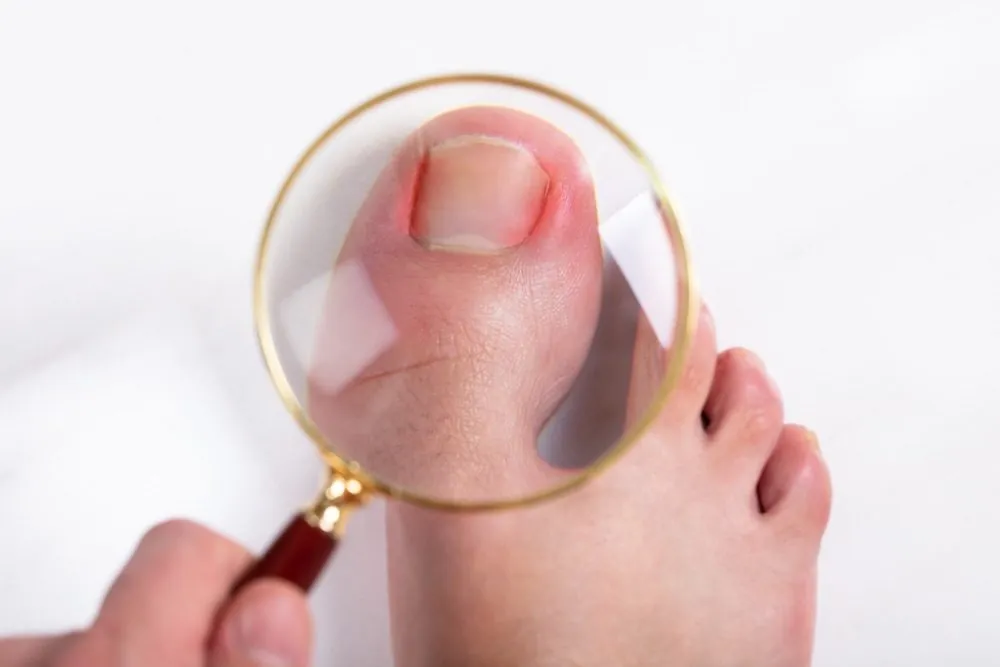

Ingrown toenails are a frequent nail issue characterized by a toenail growing into the flesh, causing irritation, pain, and sometimes infection. Addressing ingrown toenails promptly is essential to avoid complications.
Let’s explore the causes, symptoms, and remedies for ingrown toenails.
Ingrown toenail symptoms
Symptoms vary from inflammatory redness to pain and, in severe cases, blood or pus near the nail. Ingrown toenails develop in three stages:
- First stage: minor inflammation and tenderness.
- Second stage: infection and visible wound.
- Third stage: chronic inflammation with possible bulge formation; diabetics may develop ulcers.
Seeing a podiatrist is advised at any stage for appropriate treatment.
Ingrown toenail complications
While anyone can develop ingrown toenails, individuals with diabetes or arterial diseases are at increased risk. Untreated ingrown toenails can lead to serious complications including:
- Infection of the toe bone (osteomyelitis)
- Infections in surrounding foot tissues like tendons and joints
- Fungal infections such as nail fungus
- Necrosis of toe tissue, particularly in diabetic feet
Ingrown toenail diagnosis
Podiatrists diagnose ingrown toenails through visual foot examination and may use additional tests to identify underlying causes:
- Visual inspection of the foot
- Digital x-rays to exclude bone injury
A nail culture test might be requested if a fungal infection is suspected.
Causes and risk factors
Several factors can cause ingrown toenails, including:
- Nail shapes: wide, curved, or thick nails
- Nail care: improper cutting, such as cutting nails too short or at an angle
- Infection: fungal infections like onychomycosis
- Shoes: tight or ill-fitting footwear creating excessive pressure
- Excessive sweating: softening of skin increasing susceptibility
- Foot bunion (hallux valgus): big toe deformities reduce shoe space and increase vulnerability
- Repeated microtrauma: sports or manual labor causing foot trauma
- Pronation or supination: altered foot positioning during walking affecting toe shape
Ingrown toenail prevention
Preventive measures include:
- Shoes: avoid narrow or overly tight shoes
Nail length: cut nails straight across with gently rounded edges; avoid cutting sides at an angle or too short.
Podiatrist care
For recurrent ingrown toenails, podiatrists offer treatments to alleviate pain and prevent recurrence, such as:
- Medical nail trimming: removing affected nail part, sometimes under anaesthesia
- Prescription antibiotics: topical creams tailored to the infection
- Orthonyxia: use of nail braces to correct deformities
- Surgery (matrixectomy): permanent removal of nail matrix to eliminate problem
- Therapeutic taping: protecting the toe between treatments
Local anaesthesia may be needed; early consultation improves outcomes.
Home remedies for ingrown toenails
To relieve ingrown toenail pain at home, consider:
- Foot baths: soak in salt water 1-2 times daily to disinfect
- Antibiotic cream: use over-the-counter products
- Disinfect and dry: clean foot thoroughly and keep dry after showers
- Bandaging: protect the toe with sterile gauze after cleaning
These are supportive measures and should not replace podiatric care.
PiedRéseau – Learn more
For more information on ingrown toenails and foot health, visit PiedRéseau regularly. Remember, online articles do not replace professional podiatric visits.
Take care of your feet, they’re precious!