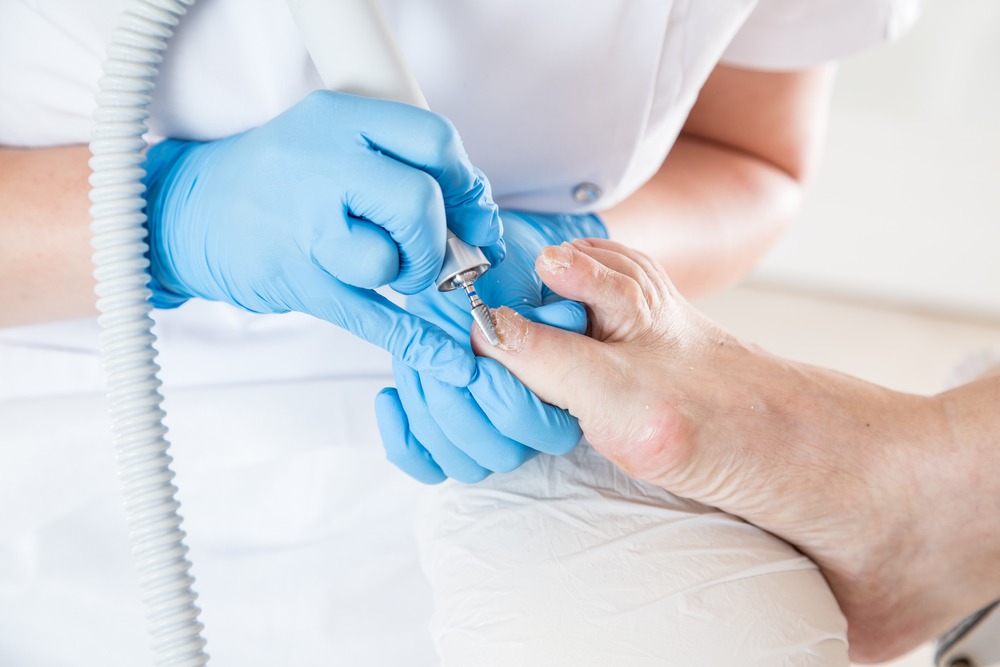

Toenail trauma occurs from a blow, crush, or foreign body and can lead to lifelong abnormalities. Early treatment is recommended to limit cosmetic damage. Its symptoms can resemble tumor signs under the nail, so proper attention is essential.
Symptoms of traumatic nail damage
Toenail trauma is the nail’s response to unusual shock or force. Common symptoms of subungual hematoma after injury include blood buildup under the nail, dark purple or blackish-blue discoloration, prolonged throbbing pain, and partial or total nail detachment weeks later.
Other signs may present as pigmentary discoloration growing with the nail, torn nails, lesions on nail edges (lateral folds), sudden sharp pain, or severe cases involving phalanx fractures.
These symptoms can be confused with nail tumors, but tumors manifest color changes gradually over time, unrelated to nail growth, and persist without improvement.
Ensuring the nail does not cause infection is crucial. A podiatrist can diagnose and recommend appropriate treatment.
What might cause toenail trauma?
Traumatic toenail injuries result from excessive force or blows to the foot tip. Causes include trapping the foot in doors or between objects, dropping heavy items on toes, improperly treated ingrown toenails, foreign objects like splinters under nails, and wearing ill-fitting shoes.
Athletes, especially runners or tennis players, are more prone due to repeated toe-toe cap impacts causing microtrauma and cumulative nail damage.
Certain groups, including diabetics, those with neuropathy, immunocompromised people (e.g., chemotherapy, HIV), or those with previous foot infections, risk infections or complications from traumatic nails.
Preventing toenail trauma
Though prevention is difficult given the unpredictable nature, actions can reduce incidents:
- Trim toenails regularly, not too short
- Wear properly fitted shoes suited to activities
- Avoid barefoot walking where sharp objects or debris like rocks or wood fibers are present
Treating toenail trauma
Most traumatic nail injuries are not alarming but must be properly assessed and treated. Immediate care includes:
- Soaking toes or foot in cold water
- Cleaning and disinfecting wounds
- Applying pain relief lotions or gels if suitable
Consult your podiatrist if you suspect a hematoma or persistent pain under the nail. Your podiatrist can accurately diagnose and offer treatment such as foreign body removal, ingrown toenail care, or sterile drainage of subungual blood with a needle.
In severe damage cases, total nail removal may be necessary.
PiedRéseau: do not forget about your toenails!
Learn more about toenail trauma through frequent articles on PiedRéseau. Although the website offers valuable information, nothing replaces a face-to-face consultation with a podiatrist.
Take care of your feet, they are precious!