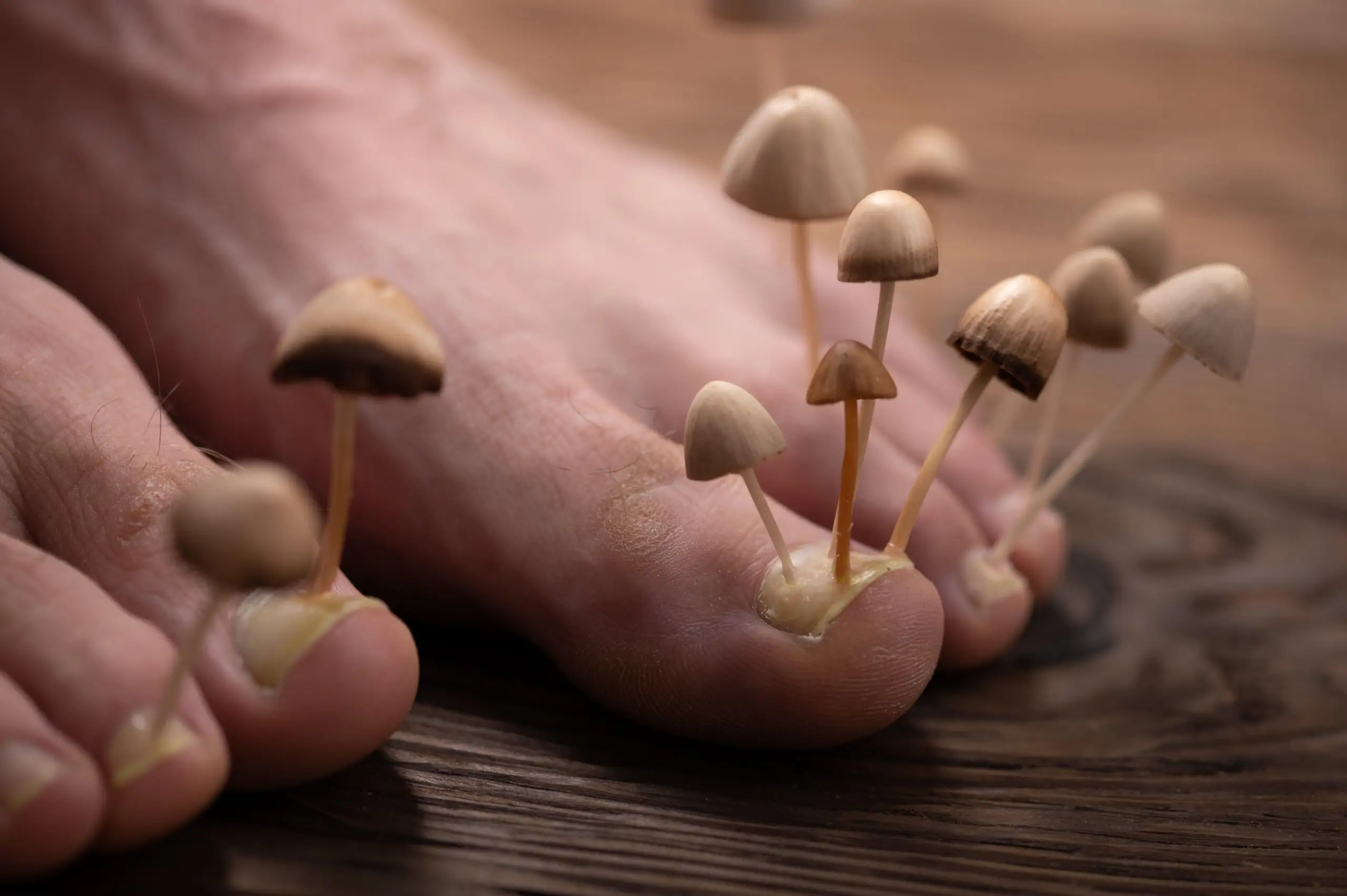

Foot Fungi: A Common but Often Overlooked Infection
Foot fungi affect many adults in Quebec and are often mistaken for minor skin irritations, leading to delays in seeking treatment. Podiatrists treat these infections under foot dermatology, focusing on skin and nail disorders. Recognizing the types of foot fungi helps in early intervention and preventing recurrence.
Dermatophytes: The Main Cause of Foot Fungi
Dermatophytes are the primary cause of foot fungi, feeding on keratin in skin and nails. The leading species is Trichophyton rubrum. These fungi flourish in warm, humid conditions, especially in closed shoes. Shoe choice and fit significantly influence their proliferation.
Fungi Between the Toes: Recognizing Athlete’s Foot
Athlete’s foot is the most common foot fungal infection, presenting as interdigital redness and cracks, chronic plantar dryness with thickened skin, or vesicular small blisters. These signs can resemble eczema, psoriasis, or corns, which requires careful differentiation. Additional details on similar lesions can be found in How to Treat My Plantar Wart at Home.
Onychomycosis: When the Fungus Reaches the Nail
Onychomycosis occurs when fungi infect the nails, causing them to thicken, discolor, or become fragile over time. However, thickened nails may also result from trauma or mechanical causes. For more information, see Thick and Deformed Toe Nails, which highlights the importance of clinical examination.
Yeasts and Molds: Less Common Forms
Yeasts like Candida can cause persistent redness and sensitivity between toes. Molds sometimes infect nails weakened by trauma, complicating diagnosis. Podiatrist assessments combined with molecular analysis tests for fungal detection help differentiate these infections from other skin conditions.
Factors Favoring Foot Fungi
Foot fungi thrive with continuous moisture, excessive sweating, and repeated microtraumas. Sensations of heat can precede irritation, as explained in Relieving the Discomfort of Hot Feet. Prevention through foot hygiene is key; keeping feet clean and dry reduces recurrence. The INESSS stresses minimizing moisture in skin folds for skin health.
People at Higher Risk
Individuals with diabetes should monitor foot skin and nails closely. Seniors are also vulnerable to onychomycosis due to circulation changes and natural nail thickening.
When to Consult a Podiatrist
Consult a podiatrist if infections spread, become painful, or do not improve with over-the-counter remedies. Find a podiatrist near you for a personalized diagnosis and treatment plan.
Common Questions About Foot Fungi
Do foot fungi disappear on their own?
Foot fungi may temporarily improve but typically persist without proper treatment.
Is a thick nail always a fungal infection?
No, trauma or shoe pressure can also cause nail thickening.
Are foot fungi contagious?
Yes, they spread by direct contact or contaminated surfaces like locker room floors.
Better Understanding Foot Fungi to Act Early
Foot fungi mainly consist of dermatophytes like Trichophyton rubrum. Athlete’s foot and onychomycosis have different forms, influenced by moisture, footwear, and medical conditions. Early consultation at a podiatry clinic enables tailored care, helping maintain foot health, mobility, and autonomy.