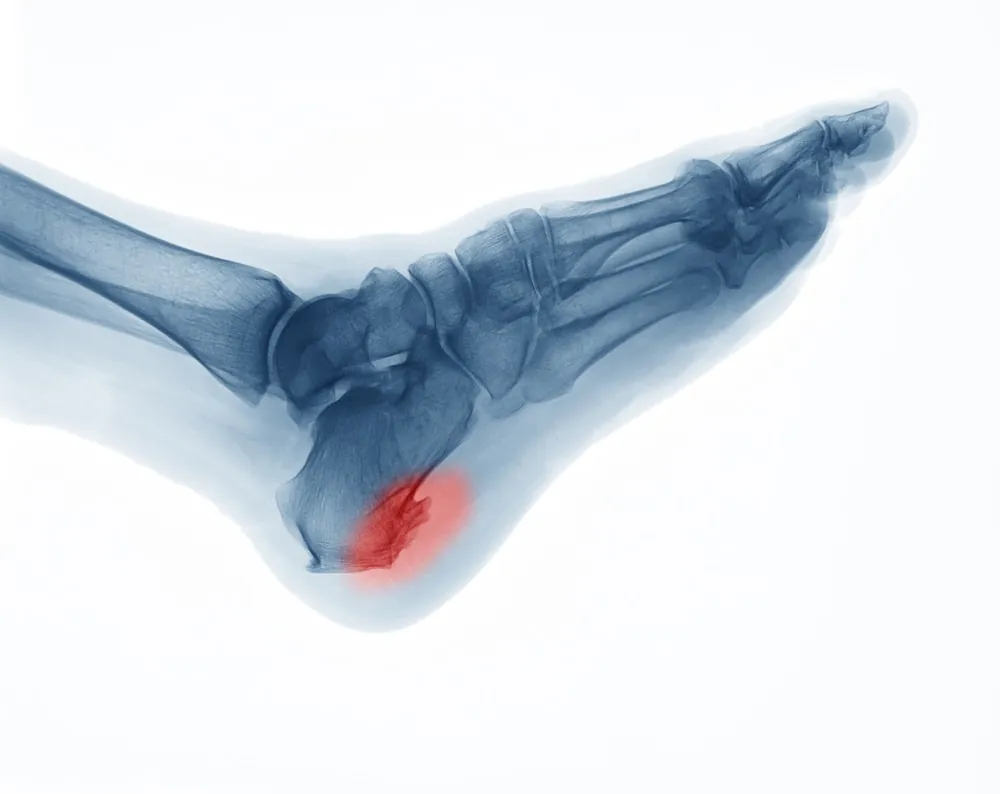

When you place your foot on the ground, do you feel discomfort beneath your heel? Heel spurs, also known as Lenoir’s thorn, are bony protrusions on the inside of the heel that can be detected by X-ray. Many people with this condition experience pain when taking their first steps in the morning or after sitting for a long time. Imaging usually reveals this structure, which is rarely palpable. Learn more about heel spurs.
Symptoms of Heel Spur
Heel spurs often cause no symptoms, and many people do not feel discomfort even when standing or walking for long periods. This growth can actually help strengthen the plantar fascia, a fibrous band supporting the foot arch. However, the excessive strain on the plantar fascia can cause inflammation known as plantar fasciitis, which is the true source of heel pain.
Plantar Fasciitis and Lenoir’s Thorn
Plantar fasciitis, an inflammation of the fascia, is a main factor in heel spur development. The microtrauma to the fibrous band forces the foot to compensate, causing calcification and resulting in the formation of the heel spur. While surgery is the only way to remove the spur, treating plantar fasciitis can effectively reduce associated pain.
Causes of Heel Spur
Lenoir’s thorn is linked to various predisposing factors:
- Heredity: family history increases risk.
- Occupational strain: jobs requiring long standing, walking, or lifting stress the plantar fascia.
- Excess weight: overweight individuals are more prone.
- Foot type: both cavus feet with tight fascia and flat feet putting strain on the fascia.
- Physical activities: high-impact sports like jogging increase foot stress.
- Trauma: injuries to the heel can cause fascia calcification.
- Arthritis: certain types can induce large painful spurs.
- Shoe type: poorly fitting or unsupportive shoes increase risk.
- Walking barefoot: puts excessive stress on the plantar fascia.
Preventing Heel Spurs
Prevention measures include:
- Wearing sturdy, cushioned shoes.
- Avoiding high-impact or jumping activities if symptoms appear.
- Maintaining a healthy weight.
For ongoing heel issues, consulting a podiatrist is recommended. Listening to your body’s signals is essential.
Medical Treatments for Heel Spurs
Treatment is usually unnecessary unless pain occurs. Options include:
- X-rays to check for spur fractures requiring immobilization.
- Heel pads for cushioning, especially if fat pad atrophy is present.
- Foot orthoses to support and address possible dystrophic spurs, particularly with arthritis.
- Surgery to remove the spur is a last resort due to biomechanical impacts.
Other Types of Heel Pain
Besides plantar fasciitis, other conditions causing heel pain are:
- Baxter’s neuritis: pain due to calcaneal nerve compression.
- Achilles tendonitis: pain located behind the heel.
- Posterior tibial muscle tendonitis: pain in front of the heel towards the ankle.
PiedRéseau – Learn More
For more information on plantar fasciitis and heel spurs, PiedRéseau regularly publishes articles. Despite comprehensive content, consulting a podiatrist is essential for personalized care. Take care of your feet; they are precious!