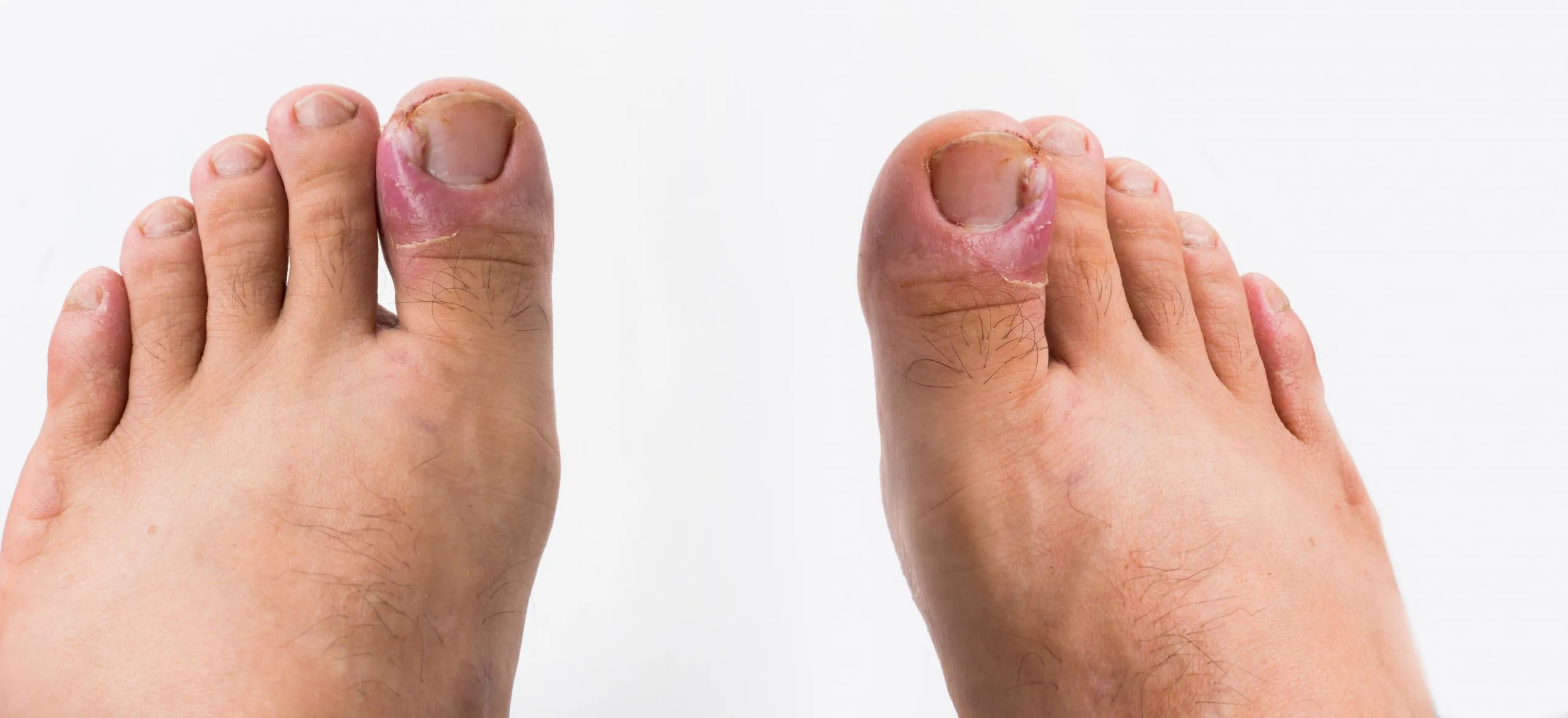

Paronychia is an inflammation or infection of the toenail cuticle, often caused by the bacterium Candida albicans. It leads to throbbing pain, redness, and swelling, and if untreated, can cause pus accumulation and infection spreading to the toe or foot. Learn more about medical treatments for paronychia available at podiatry clinics.
Paronychia Drainage
When paronychia causes pus under the skin, a podiatrist may treat it with drainage. The procedure involves anesthetizing the area, separating infected skin from the nail with sterile tools, and puncturing the abscess to drain pus. Self-treatment is discouraged as it risks spreading infection.
Foot Baths for Paronychia
Soaking the feet softens skin and cuticles to support natural drainage after clinical treatment. Effective foot baths include:
- Water warm enough to boost circulation without burning
- Sessions lasting 15 minutes
- 3 to 4 sessions per day
- Protective bandage between soakings
If healing does not improve or pus continues, consult a podiatrist again.
Prescription Antifungals
Paronychia can also be caused by fungal infection. In acute or chronic cases, podiatrists may prescribe antifungal medications to complement other treatments.
Antibiotics for Paronychia
Early-stage paronychia can be treated with over-the-counter antibacterial creams applied after foot baths, twice daily. More advanced infections may require prescribed antibiotic treatments.
Foot Care
Clinical foot care relieves paronychia discomfort and reduces recurrence risk. Treatments include topical creams, medical toenail trimming, and therapeutic antiseptic foot baths.
Nail Removal for Paronychia
Poor foot care and toenail deformities contribute to paronychia onset and recurrence. For severe cases, podiatrists may perform a matricectomy: partial or total nail removal followed by chemical root destruction to prevent ingrown nails and aid healing. This is considered a last-resort treatment.
More details at toenail deformation treatments and ingrown toenail surgery.
Orthopedic Shoes and Paronychia
Ill-fitting shoes are a primary cause of recurrent paronychia by exposing toes to pressure and repetitive stress, leading to nail damage. Podiatrists may prescribe orthopedic shoes tailored to the patient’s foot anatomy to reduce stress.
Conditions justifying orthopedic footwear include:
PiedReseau – Learn more
For detailed information on foot infections including paronychia, visit PiedReseau. However, professional podiatrist consultation remains essential for accurate diagnosis and treatment. Take care of your feet—they are invaluable!