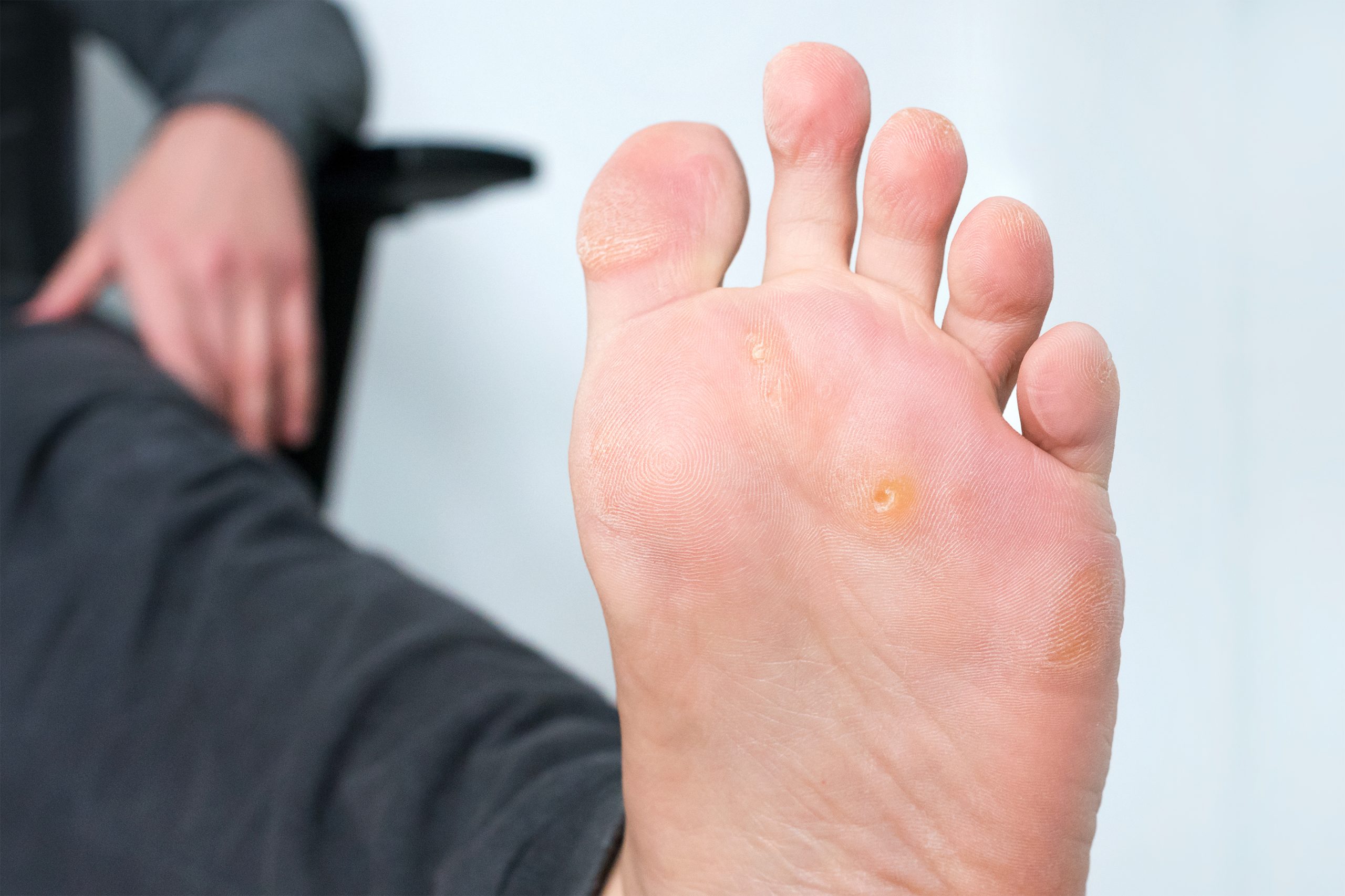

Foot corns create a spiky sensation that penetrates the skin. If left untreated, they can develop in sensitive areas of the foot and become very bothersome. However, foot corns can be easily removed, and they can even be avoided.
What exactly are foot corns?
The thickening of the skin that results from repeated friction is known as a corn. The places where corns are most likely to develop are the toes’ joints and the pressure points on the soles of the feet. Rough corns on the feet occasionally have a tiny black dot in the center. The inflammation may cause the skin around the callus to turn red. A foot deformity that causes pressure points in the shoe, extremely dry skin, or poorly fitting shoes can all be causes of corns. Once a corn has formed, it needs to be removed with a specific treatment. Thankfully, there are easy ways to avoid them.
How can I tell if I have corn on my feet?
It is important to distinguish corns from other common foot conditions. A corn is a conical callus that develops under the foot’s sole or on the toes, sometimes with a tiny black dot called a partridge eye. In contrast, warts are viral and often contracted in damp public places, appearing as single or clustered growths. Calluses are simply dry, thickened, painless skin from repeated rubbing and require different care.
How do I remove foot corns?
A foot corn can be removed by filing it down gently with a file or pumice stone after soaking the foot to soften the skin. Gradual removal is key to avoid injury, followed by moisturizing to restore skin suppleness. Over-the-counter creams and specialized dressings from pharmacies can also help reduce corns. For those with diabetes or circulatory issues, consulting a podiatrist ensures safe and effective treatment.
How to avoid foot corns?
Common causes of corns include standing for long periods, poorly fitting shoes, and foot deformities. Footwear that lacks arch support or restricts motion increases friction and the risk of corns. Choosing appropriate shoes, especially if standing or walking extensively, supports foot alignment and prevents corns. Breathable fabrics help reduce excessive sweating, which favors bacterial growth and odors. Maintaining foot hygiene by washing, drying thoroughly, removing dead skin, and applying nourishing cream is also crucial to avoid corns and related infections.
Would you like a precise diagnosis?
The podiatrists at PiedRéseau clinics across Quebec offer podiatric evaluations to care for your feet. If you experience pain from a growth on your foot, consult our professionals to identify the cause and find the best treatment.