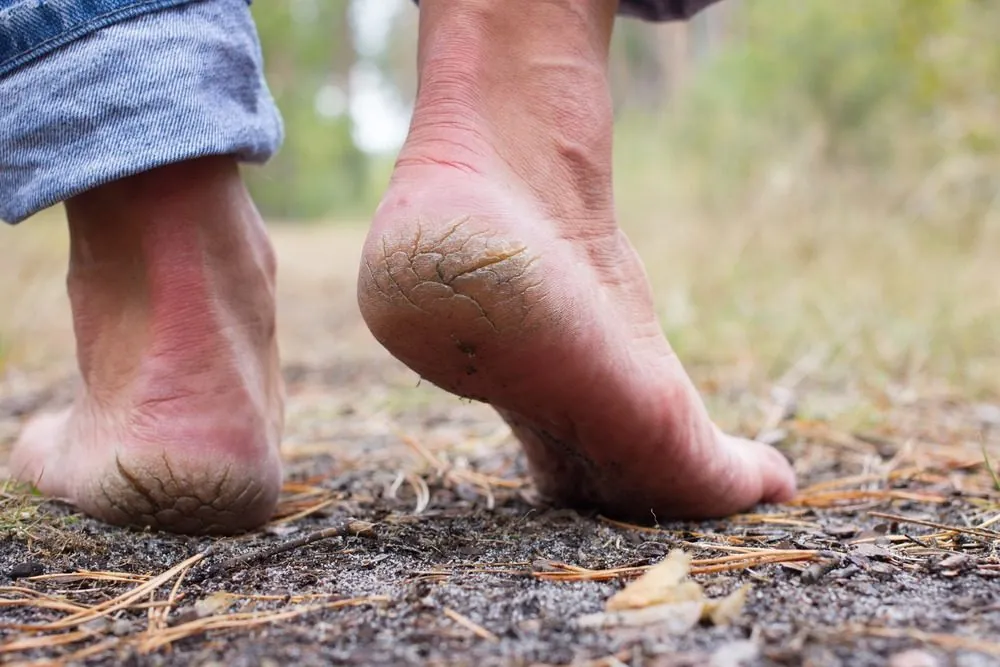

The heel is essential for maintaining bodily balance and is subjected to high pressure during this function. However, when the heel skin is improperly stressed or highly sensitive, combined with dryness and friction, cracks may appear. These cracks can worsen over time into painful wounds and infections, causing discomfort and difficulty walking. Heel cracks require careful treatment even if they are usually easy to cure.
Symptoms and warning signs of heel cracks
Heel cracks develop in stages, and recognizing early signs helps prevent infection. Before cracking, symptoms include:
- Tense skin when pressing the heel
- Sensitivity
- Significant dryness
- Itching
- Brownish skin
Without proper care, the heel skin deteriorates, causing painful fissures. Advanced symptoms include:
- Extensive dryness
- Whitish, yellowish, or reddish skin
- Peeling skin
- Bleeding
- Infected lesions
- Difficulty walking
Untreated wounds may lead to infections such as athlete’s foot and bacterial infections. Consult a podiatrist or health expert for diagnosis and to find the best treatment.
Causes and risk factors of heel cracks
Heel cracks can be caused by multiple factors, including:
- Hot, dry climate
- Prolonged untreated dehydration preventing skin cell regeneration
- Untreated calluses
- Wearing open shoes regularly
- High-intensity sports like running or tennis
- Poorly fitting shoes with little heel support
- Walking barefoot
- Overweight
- Vitamin and mineral deficient diet
- Severe foot pronation
- Cavus feet
Specific medical conditions can also contribute, such as:
- Psoriasis– causing dry, inflamed skin
- Diabetes– reducing natural hydration of the foot
- Hypothyroidism– leading to dry, cool skin
- Eczema– producing patches and itching
Preventing heel cracks
Although heel cracks rarely cause serious issues, prevention is important. Effective measures include:
- Daily moisturizing of heels and soles
- Regular use of exfoliating files to remove hardened skin
- Foot baths to soften skin
- Wearing well-fitting, supportive shoes
- Maintaining healthy weight
- Avoiding excessive heel stress sports without proper footwear
- Choosing non-synthetic socks
Visit a podiatrist if prevention fails.
Treating heel cracks
A podiatrist specializes in foot care, including dermatological issues like heel cracks. After examination, the podiatrist offers the least invasive treatments such as:
PiedReseau – Learn more
Discover more about foot dermatology through PiedRéseau’s resources and always prioritize professional podiatrist advice. Take care of your feet, as they are precious!