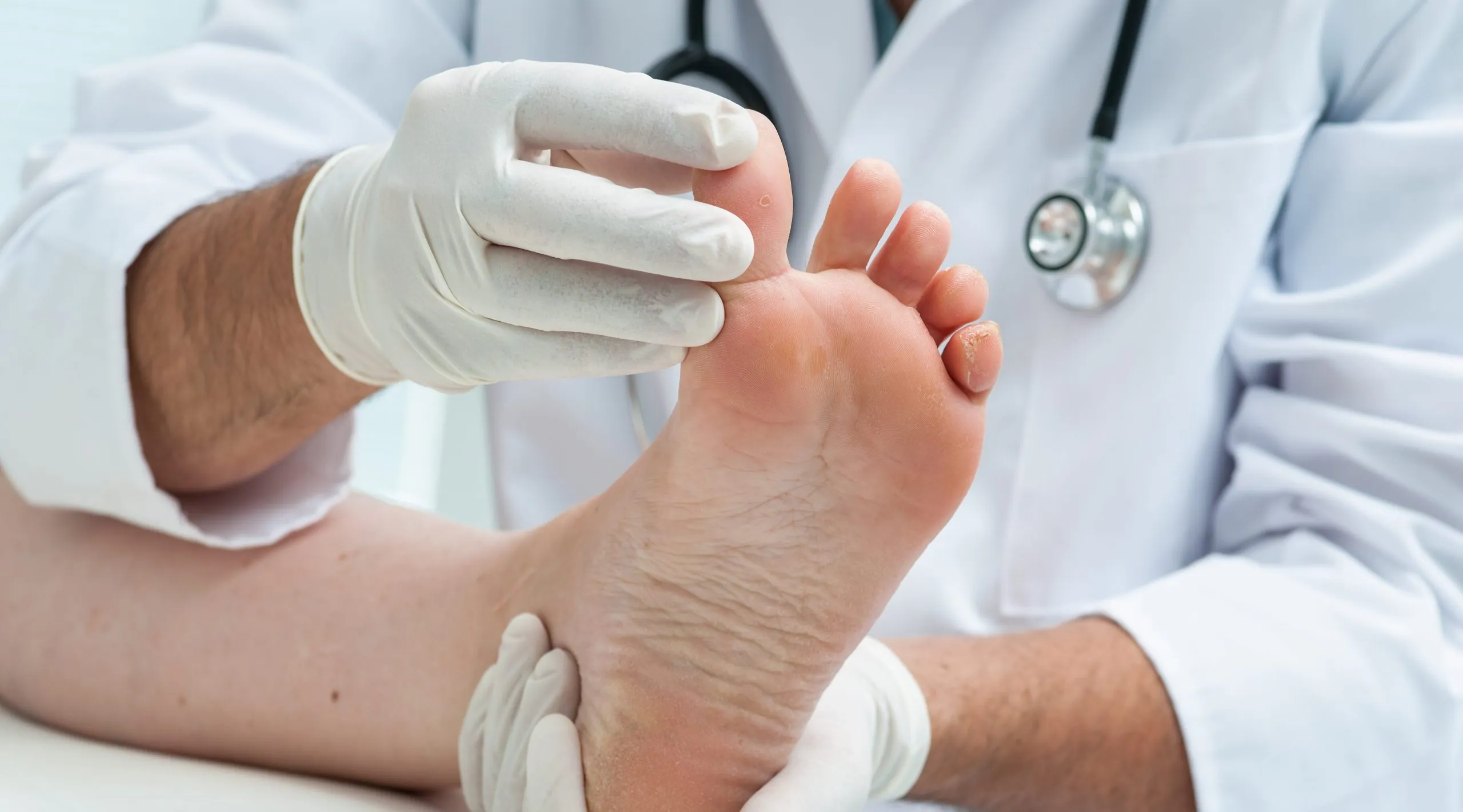

Trichophyton fungi cause athlete’s foot, a contagious dermatological infection thriving between toes where moisture accumulates. This foot fungus is common inlocker rooms and public pools, is tough to treat, and can recur. Untreated, it may spread to the sole causing bacterial infections, and affect nails leading to discoloration and thickening. Discomfort can also appear on other body parts like the groin or hands.
Discover how to identify and prevent athlete’s foot.
Athlete’s foot symptoms
Athlete’s foot, primarily affecting toes, causes unpleasant symptoms that should not be ignored. Symptoms include itching between toes, redness, persistent foul odor, desquamation (cracking and peeling skin), blisters, and thickened skin on soles. Severe infections can extend to the sole causing cracks and bacterial infections.
Higher risk groups for plantar bacterial infections include:
- Senior citizens
- Immune deficiency diseases (e.g., HIV)
- Liver inflammation
- Those undergoing chemotherapy
- Diabetic patients, due to impaired protection from poor blood flow and high sugar levels
Athlete’s foot causes and risk factors
As a dermatophytosis, athlete’s foot is caused by fungi thriving in moist conditions, which makes athletes’ feet especially vulnerable. This plantar infection is highly contagious and can affect a broad range of people.
The main causes and risk factors are:
- Excessive sweating on feet
- Moisture build-up between toes
- Wearing tight or poorly ventilated shoes
- Poor foot hygiene
- Walking barefoot in contaminated areas (pools, saunas, locker rooms, communal showers)
- Sharing contaminated personal items like socks or towels
Athlete’s foot prevention
Athlete’s foot is treatable, but if untreated, it can lead to complex issues like nail fungus. Being highly contagious, infected persons must avoid spreading it.
Prevention tips include:
- Wearing bathing sandals in damp public places
- Avoiding tight shoes that trap moisture
- Choosing cotton or wool socks over synthetic materials
- Washing feet daily with soap and water
- Thoroughly drying feet, especially between toes
- Not wearing the same shoes continuously
- Opting for open-toed shoes in wet weather
- Using only your personal sporting gear, socks, and shoes
Feet need to breathe! When prevention is insufficient, consult a podiatrist for diagnosis and treatment.
Overcoming athlete’s foot
Athlete’s foot is generally easy to identify and treat. Pharmacy creams, sprays, and powders often stop its spread. Severe or uncontrolled infections may require medication.
A podiatrist confirms diagnosis visually or via skin samples and can prescribe topical or oral antifungal medications. For nail infections, laser therapy might be recommended.
Due to frequent recurrences, consulting a medical professional is important for effective relief and returning to normal activity.
PiedReseau – Learn more
For updates on fungus-related foot illnesses like athlete’s foot, follow PiedReseau. Although the website offers valuable information, a face-to-face podiatrist visit remains best.
Take care of your feet—they’re precious!