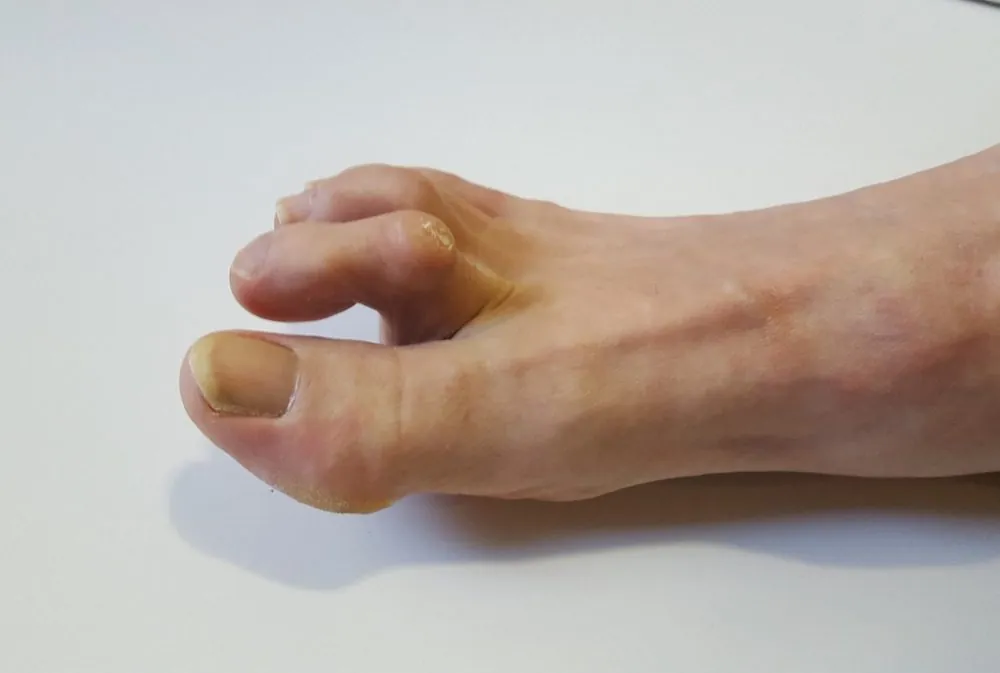

Do you ever feel pain in your toes? Are you afraid the contracture will get progressively worse? If you answered yes, you may be suffering from hammer toes. Hammer toes, claw toe or mallet toe are characterized by a contracture of the toe. The curvature of the affected toes gives the impression that your toes take the shape of an inverted V or hook. However, it is a problem that can be corrected.
Hammer toes, claw toe, mallet toe: what is the difference?
A very large number of men and women suffer from hammer toes. This deformation of the toes can be divided into 3 categories: hammer toes, claw toe, and mallet toe.
- Hammer toes: this is usually the most problematic contracture. The top of the toe’s joint is pushed upwards and rubs against the top of the shoe, causing pain. Wearing shoes becomes uncomfortable and walking painful. A podiatrist can help with silicone orthoses or, occasionally, surgery.
- Claw toe: the second most common contracture, often causing corns at the toe tips which are painful. Correction can be done with custom silicone orthoses; surgery may be needed sometimes.
- Mallet toe: less common, involving toenail shape change and a small corn. Pain is moderate and surgery is rarely required.
Symptoms
Symptoms vary with severity. Hammer toes and claw toe cause pain, corns, risk of dislocation, reduced mobility, and forefoot twinges. Mallet toe mainly causes nail deformation, occasional corns, and joint irritation. Surgery is rarely necessary.
Causes
Several factors cause hammer toes, claw toe or mallet toe. Improper footwear such as high heels or ill-fitting shoes is common. Other causes are hereditary predisposition, hollow or flat feet, hallux valgus (bunions), and trauma to foot or leg muscles or nerves.
Prevention of hammer toes
Preventing or slowing hammer toes involves choosing proper footwear that provides enough toe space and good arch support. Consult a podiatrist for guidance.
Podiatry treatment
Several treatments alleviate hammer toe pain. Consult a podiatrist to find the best option.
- Orthodontic orthoplasty: durable, custom silicone orthoses to reduce toe deformation and shoe friction.
- Toe splints: non-custom splints may help, selected with podiatrist advice.
- Footwear devices: improve muscle balance and prevent symptom aggravation (source).
- Cortisone injections: last resort to relieve joint symptoms.
- Podiatric surgery: advised in severe cases for permanent correction.