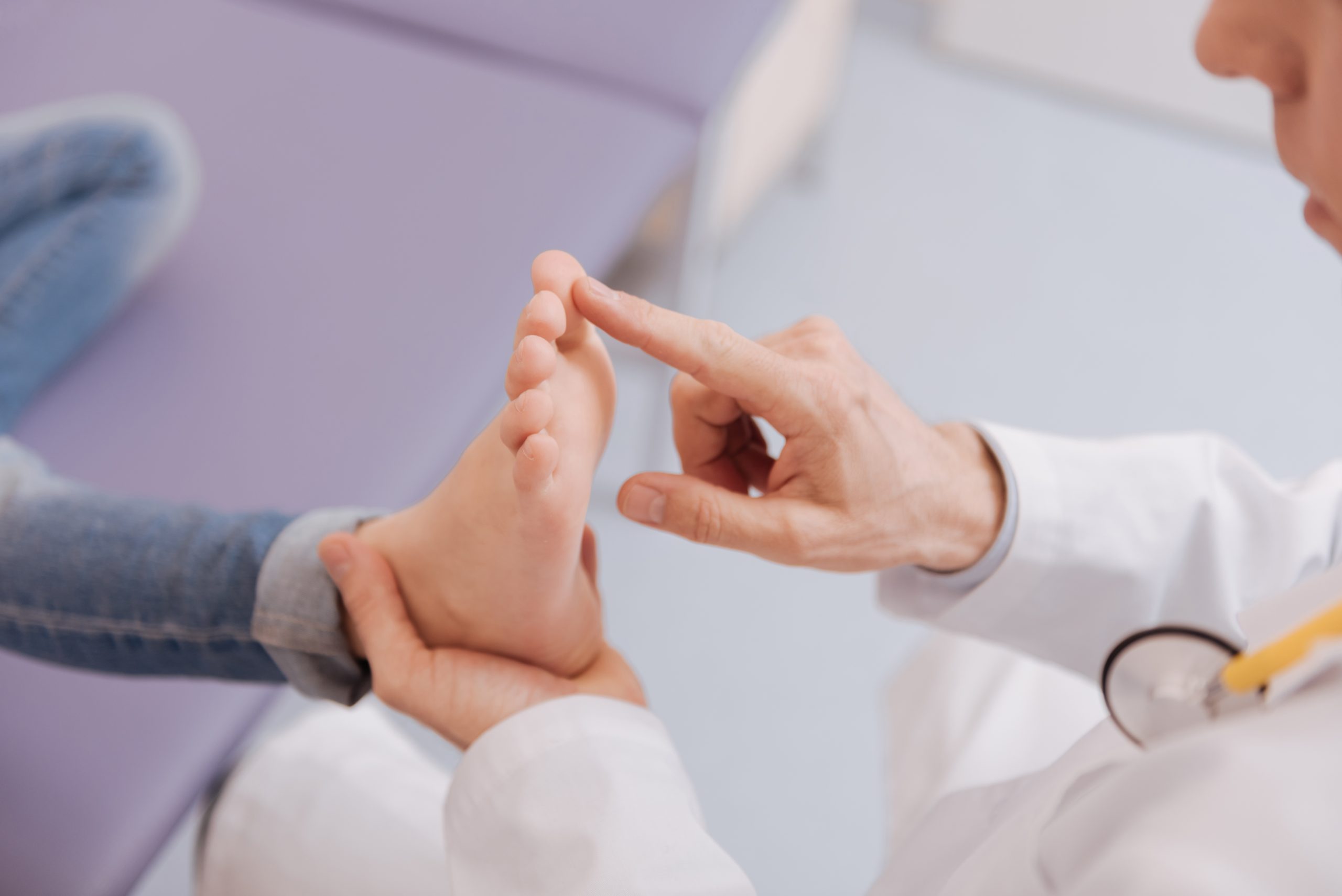

It can be difficult to distinguish between a problematic and a healthy foot in a growing child. Early detection allows the podiatrist to react quickly before the foot takes its final shape. Consequently, treatments can be more effective. This article covers some podopediatric treatments available for children’s foot pain.
A full diagnosis
Before prescribing any treatment, the podiatrist must thoroughly understand the child’s pathology using various analysis techniques, including:
- The biomechanical exam
- The postural assessment
- A digital X-ray of the feet
- Digital impressions in 2D and 3D
The podiatrist observes the impact of the feet on the child’s entire body. A child’s evaluation helps detect postural abnormalities and imbalances causing discomfort.
Children’s foot orthoses
Children’s orthotics can be worn from age three as part of podiatric treatment. Unlike adult foot orthoses, these are tailored to different developmental stages.
They treat issues such as:
- Flat feet
- Feet pointing inward or outward
- Knees in “X”
- Arched legs
- Heel pain like Sever’s disease
- Unstable ankles causing frequent falls
The podiatrist often finds children have trouble properly mobilizing their lower limbs and recommends orthotics to realign legs and feet. For example, if the gait points too much inward, orthotics may be adapted to allow outward leg rotation during propulsion.
Splints
Splints immobilize a leg or foot for extended periods in podopediatrics. They relieve pain from fractures, sprains, and tendinitis in adults and are commonly used to correct clubfoot in children.
Clubfoot is a plantar defect that curves the ankle and foot inward, affecting two types: real clubfoot and positional clubfoot.
Positional clubfoot results from wrong fetal positioning and is treated by immobilizing the foot with splints. Real clubfoot is a congenital deformity with underdeveloped bones and muscles, requiring immobilization and possibly surgery.
Splints follow surgery or cast removal to hold feet in the correct position, preventing clubfoot from returning.
Orthopedic footwear
Before walking age, shoes mainly protect the child’s feet from weather and sun. Once walking begins, shoes should match the child’s developing mobility.
Ideal footwear is cushioned, adaptable, simple, and well-fitting.
Even with traditional shoes, toddlers may face discomfort or movement difficulty. The podiatrist can recommend orthopedic shoes, often used for children with flat, unstable feet.
Orthopedic shoes help to:
- Stabilize the foot
- Protect the foot’s sole
- Facilitate wearing foot orthoses
- Prevent pain from foot deformities
With a doctorate in podiatry, podiatrists have the authority of physicians to prescribe orthopedic footwear.
Surgery in podopediatrics
Pediatric orthopedic surgery is usually unnecessary due to children’s highly adaptable feet. Surgery is recommended only in severe cases or when traditional treatments fail.
Common pediatric podiatric surgeries include:
- Surgery for clubfoot
- Stretching a shortened Achilles tendon
- Correcting congenital bone malformations
Some podiatrists perform minor or bone surgeries, but invasive pediatric procedures are usually handled by orthopedic surgeons.
PiedReseau – Learn more
Want to learn more about podopediatrics treatments? Visit our website for detailed information!
Despite the wealth of online resources, a face-to-face podiatrist appointment remains invaluable.
Take care of your feet, they’re precious!