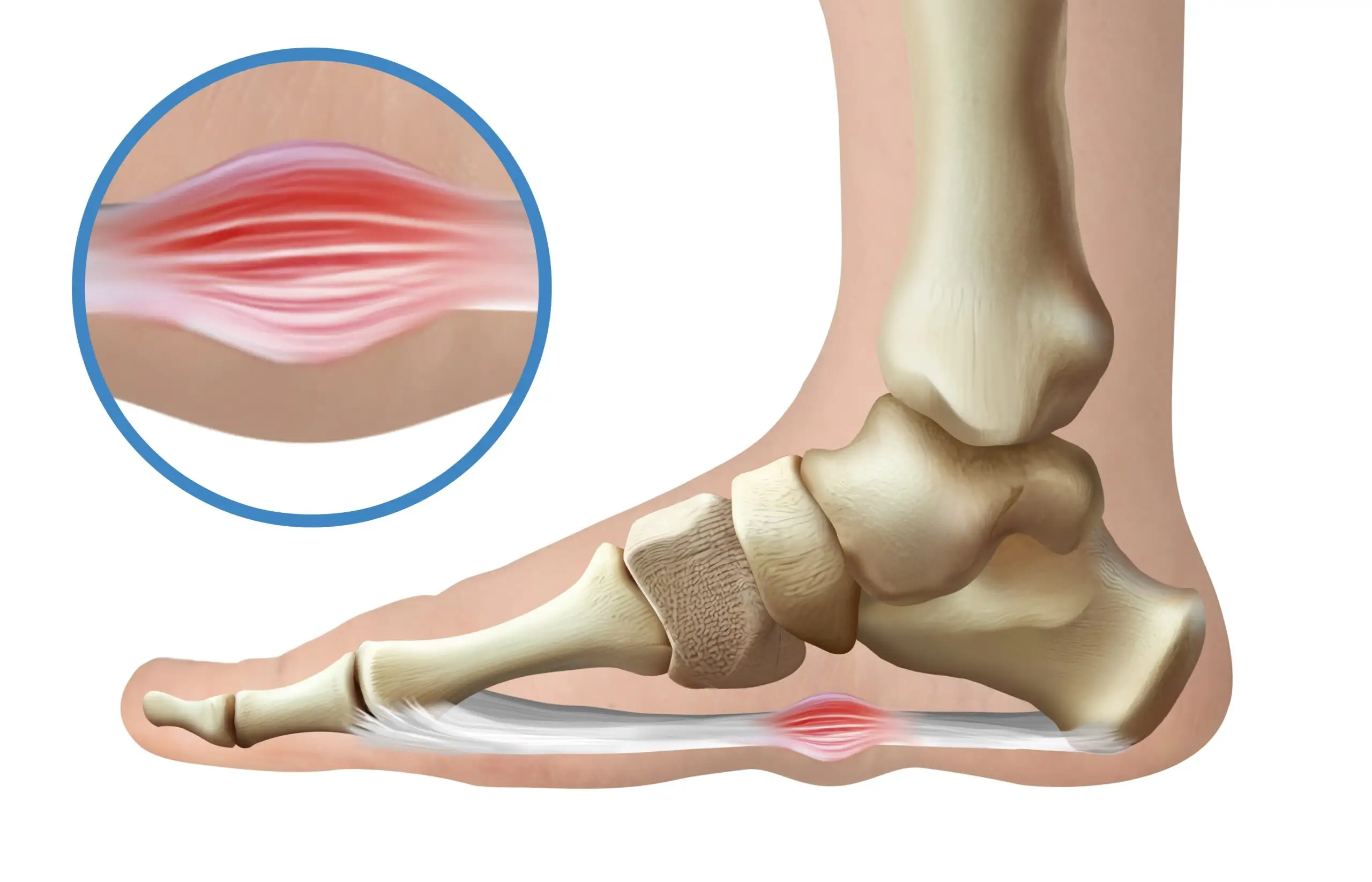

Plantar fibroma is a benign condition marked by a firm mass under the foot’s arch that can cause discomfort or pain when walking. Many discover this lump by chance, while others seek care due to foot pain. Understanding plantar fibroma’s causes, symptoms, and treatment options is essential for timely intervention. A PiedRéseau podiatrist offers tailored assessment and care.
Plantar Fibroma and Foot Pain: Understanding the Link
Plantar fibroma develops in the plantar fascia, a thick tissue supporting the foot’s arch and serving as a shock absorber during walking. The fibroma forms from localized multiplication of fibers, creating a nodule that can remain stable but may become irritated due to repeated pressure.
Pain typically arises during extended walking and can be aggravated by certain shoes. Unlike plantar fasciitis, pain is localized specifically at the nodule’s site.
Plantar Nodule or Plantar Fibromatosis
Also known as plantar fibromatosis, the condition constitutes a benign fibrous proliferation that is non-cancerous and progresses slowly. The nodule typically measures from a few millimeters to two centimeters, is firm, and usually located at the center of the arch. Diagnosis requires clinical examination by a PiedRéseau podiatrist.
What Causes Plantar Fibroma?
Though the exact cause is unknown, plantar fibroma is thought to result from repeated microtraumas to the plantar fascia leading to localized thickening. Contributing factors include family history, mechanical overload, feet with very high or low arches, and certain metabolic conditions.
Biomechanics significantly influence its development, which is why a foot biomechanical examination is often recommended.
Symptoms of Plantar Fibroma
The condition is first noticed as a mass under the skin, often painless initially. Pain develops with increased pressure, usually during walking.
Symptoms include a lump feeling under the foot, localized pain under the arch, discomfort wearing certain shoes, and tenderness to the touch. Unlike heel pain, this discomfort is more forward toward the arch, which aids in diagnosis.
How a PiedRéseau Podiatrist Diagnoses
Diagnosis starts with a thorough clinical evaluation involving palpation of the mass to assess size and mobility. Posture and gait analyses identify imbalances that might exacerbate pressure on the plantar fascia.
Medical imaging may be advised to exclude other lesions, ensuring an accurate diagnosis.
Treatment of Plantar Fibroma in Podiatry
Treatment depends on symptom severity. Asymptomatic nodules may only require monitoring. When pain impacts activities, management is necessary.
Conservative treatments include:
- Custom-made foot orthoses
- Shoe adjustments
- Activity modifications
- Local therapies like laser, ShockWave, or infiltrations based on clinical evaluation
Orthoses help redistribute pressure under the foot, reducing load on the plantar fibroma. At PiedRéseau, treatments are personalized according to the patient’s activity and goals.
Surgery for Plantar Fibroma
Surgery is reserved for persistent pain cases despite conservative treatment. It involves nodule removal but carries a risk of recurrence. Decisions are made following detailed discussion with the podiatrist.
Role of Shoes and Foot Orthoses
Shoe choice directly affects plantar pressure: rigid soles may increase irritation, while good arch support lowers plantar fascia tension.
Custom-made foot orthoses provide targeted pressure relief and are integral to comprehensive care.
Can Plantar Fibroma Be Prevented?
There is no guaranteed prevention, but reducing mechanical overload helps. Recommended measures include wearing appropriate shoes, maintaining stable weight, and consulting early for foot pain.
Early evaluation at PiedRéseau facilitates prompt management.
Frequently Asked Questions About Plantar Fibroma
Is plantar fibroma dangerous?
No, it is a benign lesion diagnosed by clinical examination.
Can plantar fibroma disappear on its own?
It tends to remain stable and rarely disappears spontaneously.
Can normal walking continue?
Yes, but pain may affect gait.
Does plantar fibroma recur after treatment?
Recurrence is possible; regular monitoring is advised.
Plantar fibroma is a benign plantar fascia mass that can cause persistent foot pain. Accurate diagnosis and personalized management at PiedRéseau ensure effective care.
If you notice a mass or pain under the arch, make an appointment at a PiedRéseau clinic near you. A PiedRéseau podiatrist can diagnose and guide treatment.